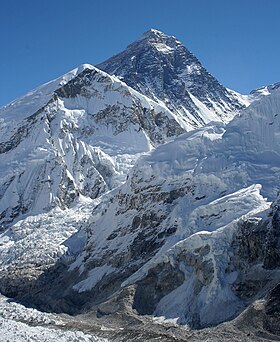
Perseverance is defined as “steady persistence in a course of action, a purpose, a state, especially in spite of difficulties, obstacles, or discouragement” in dictionary.com. This definition gives such a weightless feel to this majestic word. Really, perseverance is the reason why most people live today, and the reason some people are a source of inspiration today. Three such people are, Sir Edmund Hillary who went from an average beekeeper to conquering Mt.Everest, Terry Fox an amputee who committed great feats, and our everyday modern teenager William Wissemann. These three role models encourages our world to fight for and believe in perseverance.
Sir Edmund Hillary was a humble boy brought up in small-town Tuakau, Auckland who grew up to be known as a conqueror of Mt.Everest. His father was an editor of the local newspaper and his mother was a school teacher, so you can imagine how simple his family was. Sir Edmund Hillary grew up to be a beekeeper with his father, and just made simple and frequent climbing trips in hills and mountains in New Zealand. For that time being, he was cemented as an apiarist and thought nothing of it. Gradually, he became more fond of mountains and fell in love with these beautiful creations of nature. His devotedness for mountains, led him to become a skilled climber and soon he was mastering mountains in the New Zealand Alps. “I didn’t visualize myself becoming a renowned mountaineer,” he explained later. “It happened gradually. Very few suddenly decide they’re going to be a world champion at something.” At the age of 32 he started conquering smaller mountains in the Himalayas, and was reaching his peak as a mountaineer. Only after climbing so many mountains, was Hillary offered to join an expedition to attempt climbing the most majestic mountain of all, Mt.Everest. All other attempts at conquering this giant had been failures, and also resulted in 16 deaths. Despite the history of such expeditions Hillary still stated in an interview casted by the Academy of Achievement, “people have prayed for my welfare, but I certainly haven't”. Being one of the two amateurs in this great expedition, Sir Edmund Hillary along with Nepalese Sherpa Tenzing Norgay were the only two who achieved the majestic feat. Sir Edmund Hillary teaches the world no mountain is too great, and he proved to society that anyone no matter who they are, can achieve their goals as long as they persevere. Only by starting small could he achieve his life-long dream. His dogged-ness, his determination, led him to become the honourable man he died as. “Almost anything has its moments where you have to overcome considerable challenges, and if you're able to overcome those challenges, you get a great sense of satisfaction” these sayings that came from the lips of Sir Edmund Hillary emphasizes on why determination is worth fighting for.
Terry Fox lost his leg to cancer at the age of 18, and he was told his chances of survival were 50 to 70 percent. The night before his operation his coach, Terri Flemming, gave him a running magazine which featured an amputee running a marathon in New York. From that moment on, Terry Fox decided he wasn’t going to let the cancer win, nothing would crush his spirit. He was going to run across Canada. The following 16 months he spent in the cancer clinic were gruesome, he watched people yell in pain, he saw families clutching each others hands in hope, and he would hear doctors delivering horrifying news to his neighboring patients. Terry Fox couldn’t leave the clinic just simply forgetting all those other patients who didn’t survive, he couldn’t bear thinking he was one-third of the few people who survived, and not do anything about it. So he trained himself for his marathon of hope, and soon approached the Canadian Cancer Society about his run. But the administrators were skeptical about his success, and asked him to search for some corporate sponsors in order to test his sincerity. Terry Fox persevered, earning sponsors and soon the Canadian Cancer Society promoted his run. Terry Fox inspired people everyday, as they heard his one-two thump, and money just kept flooding in towards him. Soon his goal of raising $1 million, became a goal of $22 million. He was so close to completing the run, when unfortunately, the cancer had reached his lungs, and he could no longer continue his marathon of hope. This didn’t necessarily mean he didn’t achieve his dream, he died knowing he earned $23.4 million dollars for all those cancer patients out there. And he lived to read the telegram sent from Isadore Sharp saying that every year a run would be held in his honour. The perseverance, and spirit of this courageous young man, led to the world being believers in cancer awareness. “How many people do something they really believe in? I just wish people would realize that anything's possible, if you try; dreams are made, if people try.” -Terry Fox. Terry Fox demonstrates, that one can contribute so much to the world if they just try.
Men of the past have proved to be very courageous, and proved their determination to the world. What about the people of today? William Wissemann rejuvenates the characteristics of Sir Edmund Hillary, and Terry Fox, even though it may be personal it is very inspiring. I feel I can connect to him the most because he is a teenager of today’s world, and proves to me I can achieve whatever I wish to achieve. William Wissemann is a youth who has conquered his dyslexia step by step. He was inspired by the Rubik's Cube, it taught him that sometimes in life you have to move a few steps backward in order to move forward. In the fifth grade he was pulled out of public school, to go to a special school, and at the time he still couldn’t consistently write his name. No matter how long it took William Wissemann, he patiently learned the symbols that were so called alphabets. He is very successful today, he is to graduate in May this year with a Bachelor of Arts degrees in computer science and photography from Bard College. William Wissemann is an inspiration for today’s teenagers like myself, that nothing is impossible. It makes me think, if he can achieve what ever he has perceived so far in life with dyslexia, then why can’t I. I also believe he is a great role model for the children and teenagers out there with dyslexia and tell them to never give up. Not only that, he also shows them that there is nothing to be ashamed of, and you can tell that he was first ashamed of it from his essay. The title of his essay itself is very inspiring and deep “Accomplishing Big Things in Small Pieces”. William Wissemann is a great example of why just trying is worth fighting for.
If we did not fight for perseverance, then this world would never move forward. We wouldn’t live in the society we do today, we have all sorts of technology today because of those men who dreamt and then persevered. These three men are so inspirational because they have great characters. And perseverance itself is inspirational because it allows the world to succeed and believe in miracles. Let’s join together and do what we can.
Sir Edmund Hillary was a humble boy brought up in small-town Tuakau, Auckland who grew up to be known as a conqueror of Mt.Everest. His father was an editor of the local newspaper and his mother was a school teacher, so you can imagine how simple his family was. Sir Edmund Hillary grew up to be a beekeeper with his father, and just made simple and frequent climbing trips in hills and mountains in New Zealand. For that time being, he was cemented as an apiarist and thought nothing of it. Gradually, he became more fond of mountains and fell in love with these beautiful creations of nature. His devotedness for mountains, led him to become a skilled climber and soon he was mastering mountains in the New Zealand Alps. “I didn’t visualize myself becoming a renowned mountaineer,” he explained later. “It happened gradually. Very few suddenly decide they’re going to be a world champion at something.” At the age of 32 he started conquering smaller mountains in the Himalayas, and was reaching his peak as a mountaineer. Only after climbing so many mountains, was Hillary offered to join an expedition to attempt climbing the most majestic mountain of all, Mt.Everest. All other attempts at conquering this giant had been failures, and also resulted in 16 deaths. Despite the history of such expeditions Hillary still stated in an interview casted by the Academy of Achievement, “people have prayed for my welfare, but I certainly haven't”. Being one of the two amateurs in this great expedition, Sir Edmund Hillary along with Nepalese Sherpa Tenzing Norgay were the only two who achieved the majestic feat. Sir Edmund Hillary teaches the world no mountain is too great, and he proved to society that anyone no matter who they are, can achieve their goals as long as they persevere. Only by starting small could he achieve his life-long dream. His dogged-ness, his determination, led him to become the honourable man he died as. “Almost anything has its moments where you have to overcome considerable challenges, and if you're able to overcome those challenges, you get a great sense of satisfaction” these sayings that came from the lips of Sir Edmund Hillary emphasizes on why determination is worth fighting for.
Terry Fox lost his leg to cancer at the age of 18, and he was told his chances of survival were 50 to 70 percent. The night before his operation his coach, Terri Flemming, gave him a running magazine which featured an amputee running a marathon in New York. From that moment on, Terry Fox decided he wasn’t going to let the cancer win, nothing would crush his spirit. He was going to run across Canada. The following 16 months he spent in the cancer clinic were gruesome, he watched people yell in pain, he saw families clutching each others hands in hope, and he would hear doctors delivering horrifying news to his neighboring patients. Terry Fox couldn’t leave the clinic just simply forgetting all those other patients who didn’t survive, he couldn’t bear thinking he was one-third of the few people who survived, and not do anything about it. So he trained himself for his marathon of hope, and soon approached the Canadian Cancer Society about his run. But the administrators were skeptical about his success, and asked him to search for some corporate sponsors in order to test his sincerity. Terry Fox persevered, earning sponsors and soon the Canadian Cancer Society promoted his run. Terry Fox inspired people everyday, as they heard his one-two thump, and money just kept flooding in towards him. Soon his goal of raising $1 million, became a goal of $22 million. He was so close to completing the run, when unfortunately, the cancer had reached his lungs, and he could no longer continue his marathon of hope. This didn’t necessarily mean he didn’t achieve his dream, he died knowing he earned $23.4 million dollars for all those cancer patients out there. And he lived to read the telegram sent from Isadore Sharp saying that every year a run would be held in his honour. The perseverance, and spirit of this courageous young man, led to the world being believers in cancer awareness. “How many people do something they really believe in? I just wish people would realize that anything's possible, if you try; dreams are made, if people try.” -Terry Fox. Terry Fox demonstrates, that one can contribute so much to the world if they just try.
Men of the past have proved to be very courageous, and proved their determination to the world. What about the people of today? William Wissemann rejuvenates the characteristics of Sir Edmund Hillary, and Terry Fox, even though it may be personal it is very inspiring. I feel I can connect to him the most because he is a teenager of today’s world, and proves to me I can achieve whatever I wish to achieve. William Wissemann is a youth who has conquered his dyslexia step by step. He was inspired by the Rubik's Cube, it taught him that sometimes in life you have to move a few steps backward in order to move forward. In the fifth grade he was pulled out of public school, to go to a special school, and at the time he still couldn’t consistently write his name. No matter how long it took William Wissemann, he patiently learned the symbols that were so called alphabets. He is very successful today, he is to graduate in May this year with a Bachelor of Arts degrees in computer science and photography from Bard College. William Wissemann is an inspiration for today’s teenagers like myself, that nothing is impossible. It makes me think, if he can achieve what ever he has perceived so far in life with dyslexia, then why can’t I. I also believe he is a great role model for the children and teenagers out there with dyslexia and tell them to never give up. Not only that, he also shows them that there is nothing to be ashamed of, and you can tell that he was first ashamed of it from his essay. The title of his essay itself is very inspiring and deep “Accomplishing Big Things in Small Pieces”. William Wissemann is a great example of why just trying is worth fighting for.
If we did not fight for perseverance, then this world would never move forward. We wouldn’t live in the society we do today, we have all sorts of technology today because of those men who dreamt and then persevered. These three men are so inspirational because they have great characters. And perseverance itself is inspirational because it allows the world to succeed and believe in miracles. Let’s join together and do what we can.


After reading your post, I realized how much our world need perseverance in order to move forward, to succeed and develop. In addition, even though I knew who and what Terry Fox accomplished, I did not have any idea of Sit Edmund Hillary or William Wissemann, and what they accomplished, so I think I gained a lot of knowledge.
ReplyDeleteYour post showed depth of knowledge and research on your three examples of who was persevered and what their outcomes were. What I really enjoyed about your post was that you used and explained three different examples, or people, in which perseverance showed.
The only part I was a little confused about was when you said: 'Really, perseverance is the reason why most people live today...', because I can't understand how perseverance is the reason why most people live. I can see how it can impact and help us move on to a larger picture, but not how it's why we live. If possible, do you mind explaining this in some way?
Great Job on your post!
Julie